
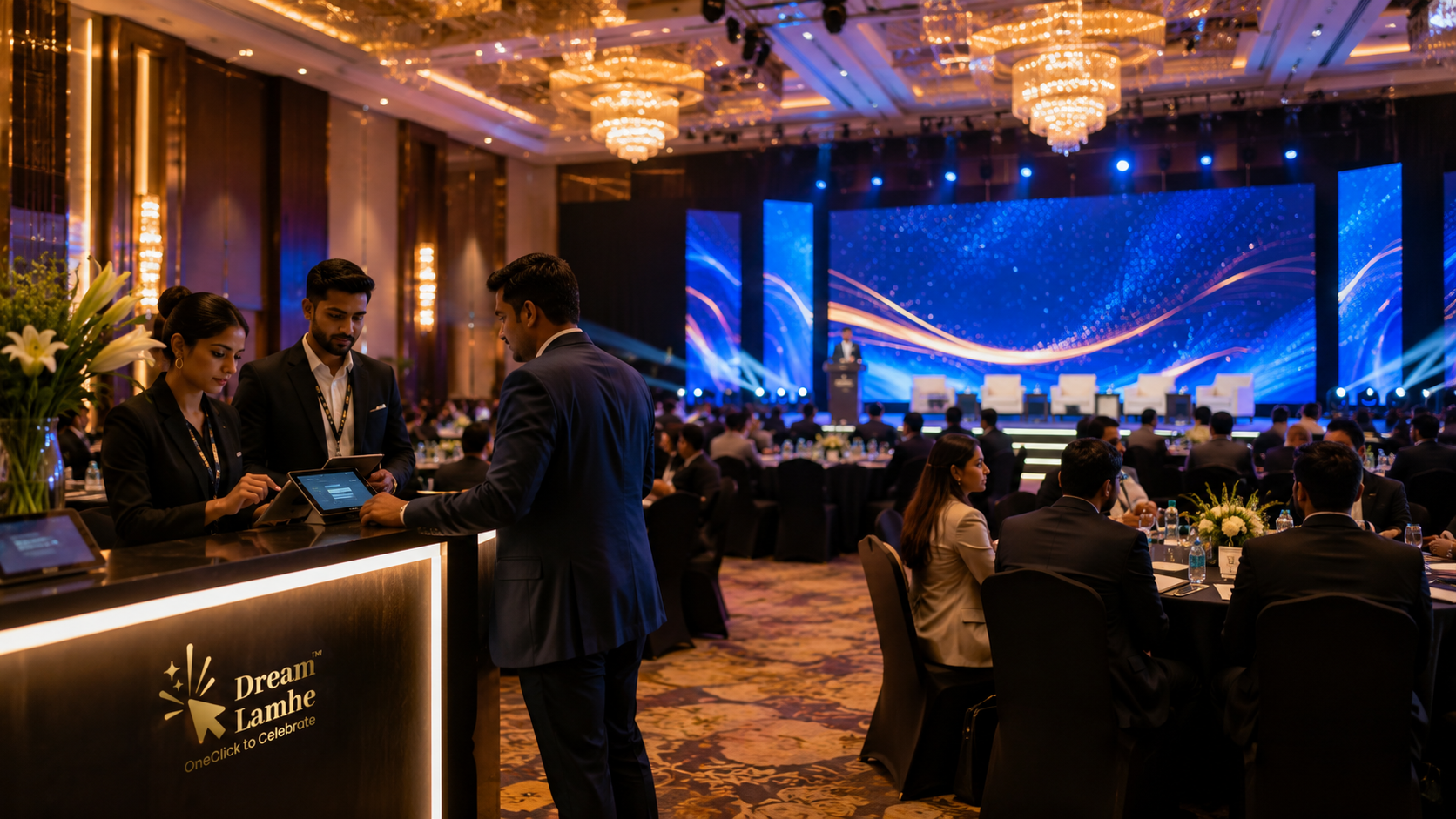
A corporate event is rarely organised only for celebration. It may be designed to recognise employees, introduce a new product, bring sales partners together, communicate leadership goals or improve collaboration between teams. The quality of planning therefore affects more than the appearance of the venue. It influences attendance, brand perception, employee participation and the overall business outcome.
Selecting a corporate event planner in Delhi NCR requires more than reviewing attractive photographs or comparing the final amount on two quotations. Companies should examine how the agency understands the objective, prepares the budget, manages technical production and responds when plans change.
Define What the Event Must Accomplish
Planning becomes difficult when the event’s purpose is unclear. Before requesting ideas from an agency, the company should identify the main outcome it expects.
An annual day may focus on employee recognition and workplace culture. A conference may be intended to share knowledge or bring clients and industry professionals together. A dealer meet usually requires business presentations, relationship-building opportunities and structured hospitality. A corporate offsite may combine meetings, team activities and informal interaction.
The agency should begin by asking about the audience, expected attendance, event format, preferred city, dates, internal stakeholders and approximate investment range. It should not immediately recommend décor, artists or venues without understanding why the event is being organised.
A good planning discussion turns a broad requirement into a workable brief.
Understand What the Agency Will Actually Manage
The phrase “corporate event management” can cover very different levels of responsibility. Some agencies only connect companies with vendors. Others manage the venue and production while expecting the client to handle invitations, travel and guest coordination.
Before confirming an agency, ask for a clearly written scope of work. Depending on the event, the scope may include venue shortlisting, budgeting, stage design, LED screens, sound, lighting, branding, catering coordination, artist management, photography, registration, accommodation, transportation and event-day supervision.
Companies should also check what is excluded. Rehearsal charges, overtime, additional manpower, permits, content creation, internet connections and transportation may not be included in the initial amount.
Reviewing the complete range of event planning services helps the company compare proposals based on responsibilities rather than price alone.
Select a Venue for Operations, Not Only Appearance
A premium-looking venue may still create serious execution problems.
For a conference, the planning team should review screen visibility, acoustics, breakout-room availability, internet capacity, speaker access and registration space. For an annual day, it should inspect the ceiling height, stage depth, power load, backstage access, green rooms, parking and guest circulation.
Venue entry and loading schedules also matter. A ballroom may be available for guests at 6:00 p.m., but the production team may need access many hours earlier to install the stage, LED wall, lighting and sound system.
For an offsite, the agency should examine room inventory, meal timings, meeting areas, transport accessibility and weather alternatives. A location that looks impressive online may not be suitable for a large team arriving together.
A professional planner should explain both the benefits and limitations of every shortlisted property.
Review the Production Planning Process
Corporate events depend heavily on technical coordination. Presentations, award videos, speaker introductions, product demonstrations and music cues must work at the correct moment.
Ask the agency how it prepares the technical plan. The team should confirm stage measurements, screen dimensions, sound coverage, lighting positions, electrical requirements and rehearsal schedules. Presentation files and videos should be collected in approved formats before the event.
Branding also requires discipline. The company’s visual identity should be reflected consistently across the stage, registration area, directional signs, badges, presentation screens and photo zones. It should not feel like unrelated designs were created by different vendors.
For a product launch event, the reveal sequence, lighting transition, screen content and speaker movement should be rehearsed together. A delay of only a few seconds can weaken an otherwise strong launch moment.
Ask for a Detailed Commercial Proposal
A useful quotation should show where the budget is being spent. It should separate important categories such as venue, food, production, décor, branding, entertainment, photography, logistics, accommodation, manpower, professional fees and taxes.
The agency should also mention the assumptions used while preparing the proposal. These may include guest count, event duration, venue timings, screen size, number of rooms and transport requirements.
Certain costs may change after confirmation. Additional guests, upgraded menus, extended hours, extra rehearsals or late branding requests can increase the final amount. These possibilities should be discussed early rather than introduced close to the event date.
The company should also appoint one person or a small authorised group for approvals. When several departments send conflicting instructions, the planning process slows down and vendors may need to redo completed work.
Confirm Who Will Be Present on the Event Day
The person who attends the sales meeting may not be the person managing the event. Companies should therefore ask for the proposed event-day team structure.
A large corporate programme may require a project lead, production manager, stage manager, guest-registration team, hospitality coordinators, transport supervisors, artist coordinator and vendor managers.
Each role should have a defined responsibility. The stage manager should control speaker and performance cues. The registration lead should manage guest lists and entry issues. The transport coordinator should track vehicles, drivers and departure schedules.
A shared planning tracker can help both sides follow approvals, guest data, content deadlines, payment milestones and pending decisions.
Examine the Agency’s Logistics Capability
Logistics becomes especially important when the event includes hotel stays, airport pickups, multiple venues or a large number of employees.
A capable event logistics management team should prepare travel manifests, room-allocation lists, arrival schedules and emergency contact information. For a corporate offsite, it should also coordinate meal timings, conference sessions, team activities and departures.
The schedule must remain realistic. Placing a late-night celebration before an early strategy meeting may reduce participation. Travel buffers should also be added for traffic, delayed flights and group check-ins.
Discuss Risk Before Awarding the Project
No event is completely free from uncertainty. A speaker may arrive late, a presentation may fail to open, weather may interrupt an outdoor setup or a vehicle may be delayed.
Ask the agency to identify the major risks connected with the proposed event. More importantly, ask what backup arrangements will be prepared.
A responsible corporate event organiser will not claim that problems are impossible. The team will explain how issues will be prevented, reported and resolved without disturbing the guest experience.
Choose the Team That Brings Clarity
The right corporate event planner should make the project easier for the company’s internal team. The agency should understand the objective, define responsibilities, provide commercial transparency and create a reliable execution plan.
Creative ideas remain important, but clarity and coordination are what protect the event when timelines become tight.
Planning an annual day, conference, dealer meet, award night, leadership programme, product launch or corporate offsite? Contact Dream Lamhe with your date, location, expected attendance and event requirements. The team can help shortlist suitable venues and prepare a customised proposal for your organisation.
Important: No writer or tool can honestly guarantee a “0% plagiarism” score because SEO keywords and common industry terms are often flagged. This version is fully rewritten, but the exact matched-source report is needed to correct any remaining flagged sentence precisely.
Frequently Asked Questions
How do I choose the best corporate event planner in Delhi NCR?
Choose a corporate event planner in Delhi NCR who understands your event objective, provides a clear scope of work, has strong venue and production knowledge, and assigns an experienced team for on-ground execution. Also review how the planner manages budgets, vendors, logistics, rehearsals and contingency planning before confirming the agency.
What services does a corporate event organizer provide?
A professional corporate event organizer can manage venue sourcing, event concept development, stage production, sound and lighting, LED screens, branding, catering coordination, entertainment, registration, guest management, photography, transport and complete event-day execution. The exact scope depends on the size and format of the corporate event.
When should a company hire a corporate event planner?
Companies should ideally hire a corporate event planner as soon as the event date, expected guest count and basic objective are confirmed. Larger annual days, conferences, dealer meets and product launches generally require more preparation because venue availability, production planning and vendor coordination need to be completed well before the event date.
What does an offsite event planner manage?
An offsite event planner manages much more than resort booking. The scope can include destination selection, hotel rooms, employee transportation, meeting spaces, team-building activities, meals, entertainment, branding, conference production, guest coordination and departure planning. A good offsite planner also creates realistic schedules and backup plans for travel or weather disruptions.
How much do corporate event planning services cost in Delhi NCR?
The cost of corporate event planning services in Delhi NCR depends on factors such as guest count, venue category, food, production setup, LED screens, entertainment, branding, accommodation, transport and event duration. Rather than relying on a fixed package, companies should request a customised proposal based on their actual event requirements